Thursday, 25 July 2019

Brexit, Boris, and the future of the UK

As I write this, it's been 3 years since the Brexit referendum, and a week since Boris Johnson became Prime Minister of the UK. It seems a reasonable time to pause and take stock of where we've been, where we're at, and where we're headed -- and how we should feel about it.

In short, as I'll detail below, where we've been is that we've been either unified and disunified at different times; where we are  now is a changeover period, and where we're headed is disunity (until another union!)

How should we feel about Brexit? Well, if you're anti-Brexit, then by all means feel a little bit annoyed or concerned; and if you're pro-Brexit, then by all means feel a little bit pleased. Any more extreme a reaction than that is an overreaction. Things rarely turn out as bad as the popular media and even the "experts" predict.

Impending doom

Remember Y2K? It was predicted that on the stroke of midnight on 1.1.2000 aeroplanes would fall from the sky, mobile phones and computers would stop working, and the world would be hurled into chaos. As it turned out, nothing much happened.

Remember when the UK declared war on Iraq and Afghanistan? The papers warned us that it could be the start of WW3, and an era of terror was upon us, but that didn't happen. Many people have died in the war, and that's terrible - but there is certainly not a world war going on. For most of us, life today is just the same as it was before the war began.

Remember the Labour landslide in the general election of 1997? I was just old enough to vote, and I recall all us youngsters went out wearing red t-shirts and singing Things can only get better, REJOICING that 18 years of Tory rule had finally ended. I felt sure that we were on the cusp of a great revolution... But as the months turned to years, I realised very little had changed.

Remember when Romania, Poland and Bulgaria joined the EU? The papers warned us that we'd suddenly be overrun with migrants from these countries... but that doesn't seem to have happened either.

Remember when they said swine flu / bird flu / MRSA / SARS / Ebola / <insert infectious illness du jour> was going to decimate the UK population in numbers similar to the Great Plague? In reality, more people in the UK died from using hair straighteners than from these illnesses*. So again, the news paranoia spread fear over something which just didn't take hold.
* I made up this claim about hair straighteners, but it's probably close to the truth.

What I'm saying is this: people - whipped up by news media - expect the worst, and reality seldom turns out to be as bad as the pessimistic forecasts would have us believe. Sometimes things do turn out bad, of course, but there are far, far more times when all-out chaos and apocalypse have been predicted, and instead, life has just ticked on as normal.

I realise our country leaving a union with other countries is wildly different from Y2K, the invasion of Iraq, etc. We might think that unity is really important for Britain - but it's worth reminding ourselves that unions have been created and dissolved throughout our history:

  • 6000 BC: The island of Great Britain is cut off from continental Europe by the English channel
  • 43 AD: The island of Great Britain becomes part of the Roman Empire
  • 122 AD: Hadrian's wall built between England and Scotland
  • 410 AD: Britain is no longer part of Roman Empire
  • 927 AD: Various areas (Wessex, Mercia, East Anglia etc) unify to become the Kingdom of England
  • 1284 AD: England conquers Wales and the two are unified into a single kingdom
  • 1603 AD: England and Scotland join in personal union (have the same monarch)
  • 1707: England and Wales form a union with Scotland to become the Kingdom of Great Britain
  • 1800: Great Britain forms a union with Ireland (the whole island) to become the United Kingdom of Great Britain and Ireland
  • 1922: Ireland (minus Northern Ireland) leaves the United Kingdom; the remaining countries become the United Kingdom of Great Britain and Northern Ireland
  • 1952: France, West Germany, Italy, and Benelux (Belgium, Netherlands, Luxembourg) form the EEC, which later becomes the EU
  • 1973: The United Kingdom, as well as Ireland, join the EU
  • 2014: Scotland holds a referendum for Scottish independence (but chose to remain unified within the UK)
  • 2016: The UK decide, via national referendum, to leave the EU
  • 2019: The UK leaves the EU?
  • 202?: Scotland gains independence from the rest of the UK
The above is just a whistle-stop history of England, the UK and the EU. What it doesn't show is all the other unions which have been formed and dissolved elsewhere in the world over the past 1000 years. Even within the last century we've seen the breakup and reunion of Germany, and the unions and subsequent breakups of the USSR, Yugoslavia, and Czechoslovakia. Plus there are many other newly-formed countries all over the world (Western Sahara, South Sudan, Kosovo, East Timor, Serbia, and Montenegro, among others). These new countries haven't arisen because new landmass has been created; they've arisen because an existing country has decided to split into two or more separate nations. The state of political union between countries is not static; it's more volatile than the tectonic plates on which the countries sit.

The pertinent question is whether these unions and breakups have been for the better or for the worse for the countries involved. I don't claim to be an expert in international relations, but from what little I do know, the answer is a resounding ... "it varies".

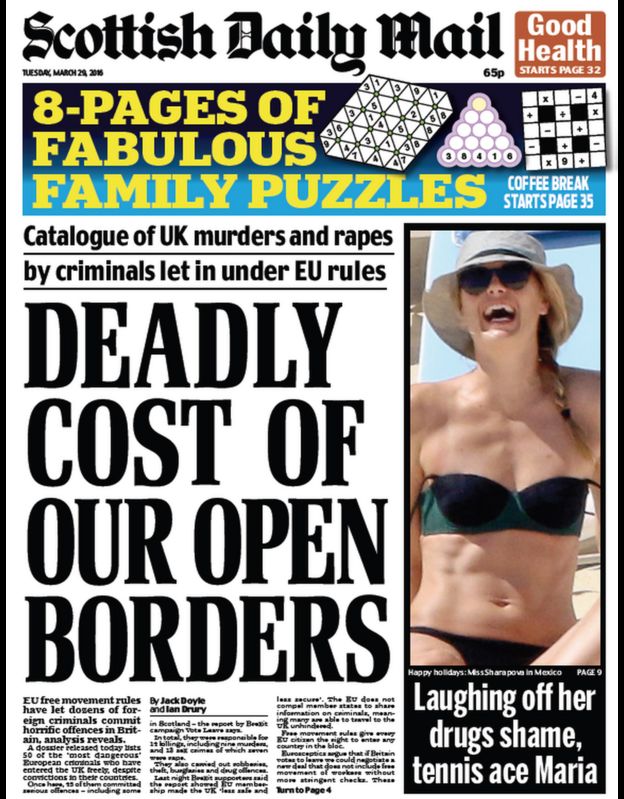
I know this may be hard to stomach, because it doesn't fit neatly with the polarised debates the media like to feed us. Unsurprisingly, we've seen sensationalised headlines on both sides of the debate. On the pro-Brexit side, weve seen headlines such as "The deadly cost of our open borders" (which explains how foreign criminals emigrate to Britain for crime sprees) and "Patients are at risk from EU doctors". On the anti-Brexit side we've seen "May likened to Captain of the Titanic" and headlines describing a "Brexit earthquake" - and if you do a web search for the words 'Brexit' and 'catastrophe' you'll find enough reading material to keep you going for life.

The UK public - by a painfully small majority - voted to leave the EU, and if Boris Johnson's rhetoric is anything to go by, we will be leaving within the next 4 months.

Leaving a union and going it alone does not signal automatic failure and catastrophe for a nation - but nor does it signal automatic success and prosperity. If we look at the examples of other countries who have left unions with other countries, and broken away to form their own country, as I noted above, the prognosis is a resounding "it depends". It's not fully clear what will happen to the UK.

My shocking post-Brexit prediction

Now I will excite and shock you with my prediction about what our lives will be like in the UK post-Brexit:

Things will be a bit difficult for a while, then they'll settle down and go back to normal.

Yes, you read that correctly. I think that the economy, the NHS, education, industry and almost all the other facets of our lives will experience a period of turmoil for a month or two, then dininishing difficulties for 1-3 years, then they'll get back to roughly the way things were before. Maybe not exactly the way they were before - the exchange rate might be 1.49 instead of 1.38, and the organisations might spend their money slightly differently, but essentially, for the vast majority of people, life will feel just the same as it did before.

I understand why people are concerned about Brexit, because the news keeps telling us that it's going to be bad, but I really think that within 1-3 years, things will get back to normal, and then the long term will take care of itself. You might think I'm in denial, but I think I'm taking the news with a pinch of salt.

Who is to blame?

In these uncertain times, the fear and panic which people feel can be slightly mitigated when they have someone to blame. So who should we blame? Maybe the Vote Leave campaign for their false claims about Britain sending £350m a week to the EU? Maybe we should blame the media for taking sides, exacerbating hostility towards migrants and fear of the EU? Or perhaps we should blame the British people for voting on an issue they knew little about? But there's a small group of people - and one person in particular - who seem to have escaped people's wrath, and I say they have a lot to answer for. Who am I talking about?

David Cameron, and the Conservative Party which he led. He was the one who called the referendum. He is the one who started the ball rolling. If you want to blame someone, blame him.

If Brexit is a catastrophic problem, then why on earth hold a referendum in the first place? I've heard it said that the British public voting Leave is like a turkey voting for Christmas dinner. But you know what? Turkeys are pretty dumb, and if given a vote, they might well vote to become Christmas dinner, because they don't understand what they're voting about! So if you really want to preserve the welfare of the turkey, don't give it the vote at all!

If it's true that Brexit spells disaster for the UK, and that it's painfully complex to understand, then leaving such a life-altering decision up to the ignoramuses  on the street is utterly ludicrous. So if you want to blame someone for the way things are, blame David Cameron and the Conservatives. 

It is probably true that the UK public were (and still are) woefully ill-informed about what Brexit will do to the economy, public services etc. Most people make voting decisions on tiny scraps of rhetoric and posturing, in some sort of knee-jerk fashion. Given this (possible) fact, and if Brexit really will be a never-ending nightmare, then why give the British public the chance to vote for it? David Cameron may have the answer, but I do not.

Final word

There are many wonderful times in life, and many terrible ones. The best times of your life are things like your wedding day, playing with your kids, times with loved ones, and parties with friends. The worst times of your life are things like your parents dying, getting Cancer, your child having mental health problems, suffering a disability, being attacked, or getting divorced.

Very few people will have Brexit up there on their list of best or worst things that have happened in their lives. Will you really look back on you life and see Brexit as one of the worst things that has happened to you? If not, then why worry? Get on with your lives, getting married, having kids, partying etc, and enjoy yourself. If, on the other hand, Brexit is really one of the worst moments of your life, then you have my every sympathy.

But I genuinely think that in a few years, Brexit just won't be a concern any more. As Elsa once sang:
"It's funny how some distance makes everything seem small, and the fears that once controlled me can't get to me at all [...] let it go, let it go..."

If ever we need to take the advice of a Disney princess, it's now. Brexit is but a mere tiny blip in our lives, and less still in history.

Friday, 12 July 2019

Why sacredness is not a thing, and its OK to climb Ayers Rock

Plenty of things are described as sacred: buildings, natural sites, books, objects, maybe even people. I don't profess to be an expert on sacredness. In fact, I don't think anyone can be an expert on sacredness, because sacredness is not a thing. Nothing is sacred as a matter of fact. You might think that this book or that building is sacred, and that opinion will be shared by some but not others, but nothing is, as a matter of fact, sacred. This is because sacredness, like being valuable, beautiful, or delicious, is just an opinion, not a genuine property of something. This puts me squarely in the antirealist camp when it comes to sacredness, which fits with my atheism. We are clever apes who have progressed to the point where we make books, buildings, and artefacts, we hold ceremonies and make laws and pray to (non-existent) gods.

Of course, if you are religious then you will probably want to jump ship here, because you may not like what you're about to read.

Still with me? Ok then. So, take some inanimate objects like bricks, paper, fabric and wood. Bricks can be thrown in a pile, left in a builders merchants, built into a garden wall, or built into the shape of a church. If the bricks happen to be built into the shape of a church, the bricks do not suddenly become sacred in virtue of having been arranged into the shape of a church, do they? After all, I could (were my bricklaying skills good enough) arrange bricks into the shape of a church in my garden, and then use the structure for picnics, a place to keep my bins, or whatever; arranging bricks into the shape of a church wouldn't make them sacred. We'd agree that it wasn't a sacred place wouldn't we? I don't know, maybe some people would say the bricks had become sacred in virtue of being arranged into that shape?!

The same can be said about the other substances - paper can have all kinds of words and pictures printed on it - the terms and conditions from a contract, a story about Spiderman, or religious passages. To me, no piece of paper is any more sacred than any other simply because of the words that a printer printed on it. Burning 'sacred' or 'holy' texts in private, where no one will know (omniscient gods notwithstanding) seems morally unproblematic to me. In the same vein, wood can become a chair leg, or a cross; fabric can become a mini skirt or a headscarf.

Clearly, some people do believe that some items are sacred, so my simply denying that sacredness is a thing might seem odd.

But consider the following. Suppose we take an item which everyone agrees is not sacred. For example, a child's sock. Now let's suppose that one child believes the sock is sacred. Does that make it sacred? It seems not. But what if ten or twenty people believe it's a sacred sock? Once a group of people say an item is sacred, its sacredness seems to gather some weight. We might shake our heads and think that they are silly people, but still they'd believe the sock was sacred.

And if a whole ethnic group or religious group say the sock is sacred and they reinforce that through their actions - for example, they worship the sock or make offerings to it - then we would presumably have to shrug and say ok it's sacred to them. And maybe being sacred to someone is just the same as being sacred full stop?

How many of us have heard stories or experienced this ourselves - instances of people who've gone on holiday to strange and wonderful countries, and been doing something which they thought was totally reasonable, only to discover that the locals think the object or place is sacred and the tourist's actions are offensive or blasphemous. For example, taking a photo of a painting, or sitting on a rock, or talking in a building, or taking a selfie next to a statue, or touching a book, or standing under a tree. This list really could be extensive, because people the world over believe the most unexpected items are sacred. And that's ok, this is a free world where people can hold whatever beliefs they want.

But any such beliefs about sacredness need to be held by a threshold number of people in order to count as something that people should respect. If I believe that red chairs are sacred and I tell others not to sit on red chairs, but instead to take a quiet moment of contemplation when in the presence of a red chair, I am likely to be laughed out of town. But if I start a chair religion and gather a few hundred thousand people, my beliefs about the sacredness of red chairs might be a little more respected or tolerated.

But let's face it, red chairs are not sacred, and nor are socks. The sacredness is not an inherent feature of red chairs or socks, but simply something that onlookers may believe. "But it's just a chair" or "it's just a sock", people would insist, and they'd be right. Chairs and socks are not sacred, and nor are crosses and 'holy' texts. My believing a sock is sacred does not, as a matter of fact, make it sacred. It would make it precious to me, but not sacred, because the term sacred implies some godlike presence endorsing my belief in the sacredness of socks.

Should we respect sacredness?

Disclaimer: I like the ethical freedom to flit between deontological and consequential ethics. I do this as and when I please to suit my argument at the time. It's a free world.

In the case of supposed sacredness, I think consequentialism gives us the most sensible result. Suppose that a group of people think a particular piece of wood is sacred and should not be photographed, then it seems right that when in the presence of such people, I should not photograph the piece of wood. But when no one is around (and no CCTV or the like) then it doesn't matter one way or the other whether I take a photo of the piece of wood, just as it wouldn't matter if I photographed the red chair or the sock.

As I said above, people the world over hold the most ludicrous beliefs - that this rock should not be sat on, this building should not have menstruating women in it, this painting should not be photographed, or this mountain should not be climbed. Their belief that X does not make it the case that X.

Ayers Rock

Now, there are some objects or landmarks whose supposed sacredness is what makes them famous. For example, a statue of Christ, or Mecca, or the area where Moses parted the Red Sea. Without any beliefs in religion or sacredness, these places would be unremarkable and pretty unknown. Given that it is the area's supposed sacredness which makes it famous, it wouldn't seem right to travel to a place because it is said to be sacred, and then to disrespect its alleged sacredness in view of others.

But some landmarks would be remarkable even if no one knew that some people felt it was sacred - Ayers Rock is a prime example of this. The rock is remarkable because it's in an area of total flatness, and this natural monolith sprouts from the ground. (By the by, there are a couple of other similar monoliths in the area which are almost as impressive - Mount Conner and The Olgas). The rocks are remarkable and impressive in spite of any beliefs which locals may have about sacredness; visitors to the area would want to see these rocks whether or not they were said to be sacred. This seems to mark out Ayers Rock and its sisters as being interesting independently of supposed sacredness, and I suggest that this difference is crucial. I climbed Ayers Rock back in 2002. At the time, it was known that the locals did not want people to climb up it, because they felt it was a sacred rock. But I - and a couple of hundred other people - did climb it that day, and I imagine that similar numbers have continued to do so every day over the past 20 years. But it seems that tourism has finally bowed down and will soon stop people from ascending the rock, solely because some people have said it's sacred. It continues to draw attention due to this soon-to-be-enacted ban.

Even people who believe in God and believe that a church or a Qur'an or a turban is sacred might struggle to believe that a lump of rock can be sacred, so you can imagine how difficult it is for an atheist to accept that Ayers Rock is sacred. If some people said that Mount Everest or Lake Michigan or the English Channel were sacred, would that stop people from visiting them, walking on them or sailing on them? Of course it wouldn't. And not should it.

When I walked up Ayers Rock, I noticed that some areas had worn smooth with being walked on so much, and I suppose that smoothing has continued over the past 20 years. That is a contender for a sensible reason to prevent people from walking up it, in the same way that we don't traipse all over the Sphynx. It has nothing to do with sacredness, and everything to do with preserving incredible sites of interest. But how much damage has in fact been done to Ayers Rock? A millimetre here or there is nothing to write home about, and therefore we can easily see that the seemingly sensible reason is not really that sensible at all. Every day, people traipse up and down Ayers Rock, and even if it's a centimetre rather than a millimetre which has been lost, this is still not reason enough to stop people walking on it.

Ayers Rock is geologically incredible, Christ the Redeemer in Rio is impressive, and a religious text may tell a good story; they may be culturally important, financially valuable, and historically significant, but they are not sacred, because sacredness is merely an opinion which exists in the eye of the beholder. Ayers Rock is interesting and peculiar, but it is ultimately a lump of stone with no sacredness at all within its molecules.

Friday, 5 July 2019

Golf balls, one-word exam responses, and the myths of Philosophy

Philosophy is my life, and I love it. But not everyone really knows what it is (this includes my immediate family, best friends, and seemingly everyone who isn't studying philosophy). I just hope they haven't gone online to try to find out what it is, and found these absurd myths.

Philosophy professor with life lessons 

A philosophy professor stood in front of the lecture theatre and picked up a large glass jar. Wordlessly, he proceeded to put golf balls into it, until the class agreed it was full. Then he poured in gravel; the gravel filled the spaces around the golf balls. Again, the class agreed the jar was full. Then he poured in sand, which filled the gaps around the gravel, and again the class agreed that the jar was now full. Finally, he picked up a glass of beer and poured it into the glass jar. The beer filled the remaining gaps and the class agreed that the jar was finally full. Then the professor said "The golf balls are the most important things in your life, like family. The gravel represents other things that are important to you, like your house, job, and car. The sand is all the other things in your life, like fixing the dripping tap or doing the laundry." "What about the beer?" asked a student. "Ah, the beer just goes to show that no matter how full you think your life is, there's always time for beer!"
If you have never heard this story before, I'm sorry to have put you through it. Because this is not a post about how we ought to prioritise our family (although we should), and nor is it a post about how there's always time for beer (there isn't). It's a post rant about how these ridiculous urban myths which circulate the internet and the real world are not just irritating, but offensive to philosophy as a discipline.

There is already confusion about what philosophy really is. I am recalling open days I've attended (both as a student ambassador, and as a teacher) where people have said things to me like "I'm not sure what philosophy is, but I think it sounds interesting" (I have never really figured out how something can be interesting when you don't know what it is!) or "Is philosophy like psychology, because the words sound a bit the same". I've also been asked (usually by parents rather than students) "What's your philosophy?" as though 'my philosophy' is some sort of belief I hold about life. Now it's OK that people don't know what philosophy is - the fact that metaphilosophy is a thing demonstrates that maybe even philosophers aren't really sure what it is either!

But whoever circulates these banal tales is exacerbating the confusion. I've been in the world of philosophy for 23 years, and never have I ever come across demonstrations with golf balls about the importance of beer. Nor even have I ever come across uplifting life advice about the importance of family and why we shouldn't sweat the small stuff. This is an important message, to be sure, but not really within the realms of philosophy. The latest crazes for mindfulness and meditation have further blurred the lines for the public about what philosophy is. And input 'philosophy' into any university search box and you will get dozens of results stating that the university wants the best for their students, and how students should balance work and play, - you'll have to really dig araound to find anything about the subject discipline of Philosophy.

One word exam answer gets top grade

A final philosophy exam paper asks students to define what courage is. A student responds with the single word "This." and receives the top grade.
A philosophy exam paper consists of a single one-word question: "Why?" A student responds by simply writing "Why not?" and receives the top grade.
These urban myths are simply absurd, and really make a mockery of the gruelling nature of philosophical study - and what's worse is that many people seem to believe them! I have had students who have asked whether they are true, even after a year of writing philosophy essays. One or two students have, over the years, told me that they had constructed some clever one-sentence answer for a question on solipsism, the external world, or determinism which they were sure would get them a grade A*. I of course told them that their idea was a recipe for disaster, and thankfully, to the best of my knowledge, no one ever attempted such a smart-Alec exam response. But still the myth persists (among non-philosophy students, at least) that philosophy is a subject where one can achieve a top grade with a clever one-word or one-sentence response.

There's no right or wrong answer

Philosophy has got a name for itself as a subject where there aren't any right or wrong answers, everything is just an opinion. Ethics is probably to blame for much of this problem - many children's first (and sometimes only) taste of philosophy is a discussion in English, RE or PSHE about whether abortion/euthanasia is right or wrong. People say their opinions, argue about it a bit, then the lesson ends. As an introduction to philosophy, this sort of lesson with youngsters is not too problematic, but when it still exists among second year BA students, it is more problematic.

I'm quite the antirealist when it comes to moral facts, aesthetics, and several other fields, but the notion that in philosophy "you can just argue anything - it doesn't matter what" is a tragic misconception, and far removed from antirealism. And this confusion is echoed by resrachers in other fields, who are aghast that we philosophers don't gather data.

Don't you gather data?

People in the sciences gather data, analyse their data, and draw a conclusion; the same is true of many people in the arts, humanities and social sciences. So many of them simply cannot fathom how one can conduct research without gathering data; they just can't seem to get their heads around it. I have been to numerous interdisciplinary conferences (for example, those organised by my funding body M4C, and those organised by the University of Nottingham, and the incredulity is rife.

When I have told interested people that I am studying how care robots should conceive of harm and consent, they ask me questions like "So what data are you gathering?" "Are you going to survey people to see how they think the robots should act?" or simply "What's your methodology?" Some people have been confused, and others incredulous, bemused or even horrified about the fact that philosophers don't generally gather data (xphi notwithstanding). "What, so you're just going to write about your opinions of how robots should act? Without even finding out what anyone else thinks?" they ask.

All disciplines suffer caricaturing

I suppose it's too much to ask that the general public - and perhaps even students in other disciplines - really understand how philosophy is conducted. After all, I'm perhaps woefully misguided about other disciplines. I guess any subject can be distilled into an excruciatingly dismissive soundbyte:

  • Literature: you just read stories and say what you think about them
  • Biology: you just look at animals and plants
  • Maths: you just add up and take away
  • Art: you just paint stuff
  • History: you just read about the past
  • Philosophy: you just say your opinion about stuff
  • Sport science: you just run about and throw balls
  • Business studies: you just look at how to make money
  • Media studies: you just watch TV
I suppose when placed among these sorts of oversimplified and misguided bullet points, philosophy probably doesn't fare much worse than the other subjects do. I see philosophy as the essential foundation onto which all other knowledge is built (How can you study history without  understanding whether the past really exists? How can you study literature without knowing what language is?) But I suppose that many people see their discipline as the foundation of all others - psychology, language, history, sociology, physics, chemistry and biology can all make similar such claims (and probably lots of other subjects can too!) Nonetheless, it would be nice if people didn't belittle or caricature philosophy, my one true love.


PS - Stupid urban myths which belittle philosophy are infuriating, but if you'd like to see a collection of genuinely funny jokes about philosophy, check out see David Chalmers' website. But note that most of these will only be funny for someone well-versed in philosophy.

Friday, 14 June 2019

"They mustn't have had many good submissions" - impostor syndrome and negative assumptions

A couple of months go, I sent off an abstract to a CFP for a conference and this week I got an email saying I'd been accepted/invited to present my work there. "Hooray!" I thought - which was almost immediately followed by the thought "Maybe they didn't have many good submissions." I astonished even myself with my instantaneous self-doubt! "Maybe they're desperate for speakers?" I wondered, and "Maybe their reviewing procedures are biased?" I asked myself as I recalled the double-blind review procedure.


I can, through an act of will - and in defiance of my inner critic - insist to myself "No, my work was selected because it was good, not because they are desperate or careless with their selections", but it does sometimes feel forced and disingenuous to say that to myself. 

Of course, I recognise that my self-doubts are impostor syndrome, plain and simple (but if I recognise I have it, then I realise I'm good, and if I know I'm good then I don't have impostor syndrome!) 

Anecdotally, impostor syndrome seems commonplace among high achieving people. As kids, they see coming second as failure; getting 98% in a test just shows you weren't perfect; and no matter how well they do, still the feeling remains inside them that it's simply not good enough. Does this come from the school system? (I've seen the 'Two stars and a wish' strategy all over the place - ie each piece of work receives two positive comments and one suggestion for how it could be improved further.) I think self-doubt is perhaps reinforced by a school system which of course wants to push children to make progress. If my teachers hadn't reminded me that I needed to put capital letters after a full stop, I probably wouldn't do it now. But it can't be just the school who are to blame, as there are many kids who (outwardly, at least) aren't self-critical. But so often these aren't the kids who are getting 95% and just have a positive self-image; they are the kids who are getting 45% but just don't care that they're doing badly. There really does seem to be a correlation between high achievers and the feeling that one isn't (yet) good enough. 

Some self-doubt and feelings of inadequacy is probably what causes the high achieving - or at least helps it along. I work hard, achieve well, feel like it's still not good enough, and so work harder and achieve more. It's a good recipe for high achievement!

John Stuart Mill (I ❤️ Mill!) wrote that it's better to be Socrates dissatisfied than a fool satisfied. In many ways, it seems to be true - the esteemed but sometimes dissatisfying life of high achievers does seem to be of a higher quality than the satisfaction a 'fool' gets from, say, reality TV and beer. I'd hope that achievement and happiness are not mutually exclusive, but if they are, then for my son I'd choose happiness over achievement every time. 

But what of my own impostor syndrome? Well, I suppose I really ought to heed the advice I've given to various kids about taking pride in your achievements and accepting praise and compliments with good grace. So I'll say this (even though it feels boastful and forced): if I've been chosen to speak at a conference, it's because I'm good enough to do so. I'm awesome!!

Wednesday, 29 May 2019

Is it permissible to abuse MPs whose views we oppose?

In the past couple of weeks, Nigel Farage has had a milkshake thrown over himDavid Davies has been called a liar and a traitor, and Chris Bryant has had the word 'traitor' painted across his office in giant red letters. It's also becoming a fairly regular occurrence for female MPs to receive death or rape threats - often from members of the public online but sometimes from other politicians! No doubt this is just the tip of the iceberg; probably countless other politicians have been verbally or physically attacked on the street. It is evident that threats and violence against MPs is at 'unprecedented levels'; some news outlets have suggested that this rise is because of Brexit.

Whatever the cause, it is not just shocking, but shameful, that so many news outlets - even supposedly respectable ones such as the Independent - have branded the Farage-milkshake incident as "funny". Assaulting politicians who are trying to do a day's work is not funny, and it's not OK. Three years ago in June 2016, Labour MP Jo Cox was murdered by a far right lunatic. This was not funny or OK either. If Nigel Farage or David Davies had been seriously injured or killed, would this have been "funny"?

Whether you have left-wing ideals or right-wing ideals, whether you're a Leaver or a Remainer, whether you're online or in person, it is not acceptable to abuse or attack politicians (or anyone).

There may be some extreme circumstances where it is OK - perhaps if the country's leader is a genocidal dictator, and everyone (even his entourage) wants rid of him, and the only way to remove him from power is through violence, then maybe if other possibilities have been exhausted, violence may be permissible (or even right).

But we are light years away from that sort of extreme situation. Nigel Farage is not a genocidal dictator; he is a politician trying to do a day's work to increase support for his party. The same can be said of David Davies, Jess Phillips, the late Jo Cox, and other UK politicians who have been victims of assaults and abuse.

We might disagree with their policies; we might think they will ruin the country; we might think they are liars, dangerous for politics, or even that they are horrible human beings. But that doesn't entitle us to assault or abuse them.

Politicians are just people who are responding to public demand, so if we want to see the real villains who have caused this country's problems, we need only to look around us. We, the British people are the cause of British political problems. If the BNP, UKIP, or the Brexit party are becoming more successful, that is because of the will of the people; the parties and their leader are just fulfilling demand and trying to rise to power by giving people what they want. If no one voted these people in, they would be powerless. The Brexit referendum was promised by David Cameron in 2013 and that promise was at least partly the reason for Cameron's re-election as Prime Minister. It may have thrown our country into temporary turmoil, but democracy involves giving the people what they want, and once the votes have been cast, we should accept the results with some good old British resolve. I don't like the Conservative government, but that's what people voted for and so that's what we've got. Democracy is very valuable, and we can still value democracy while hating it's outcomes.

If we don't like our country's leaders then there are reasonable and unreasonable ways of making our views known:
- voting in elections and referendums = reasonable
- writing to our MPs or other politicians in a firm but non-abusive way = reasonable
- telling politicians face-to-face that their policies are misguided, abhorrent, or problematic = reasonable
- taking to Twitter or other social media to publicly insult and threaten politicians = unreasonable
- throwing food, drinks etc. at politicians in the street = unacceptable
- physically attacking politicians = unacceptable

If we don't like our politicians  (and I can't say I do) then we should criticise their policies and show up their policies for what they are (eg. lies, bigotry, nanny state or whatever) rather than attack individual politicians. Last year I wrote this post about why people should stop criticising Donald Trump's hairstyle, skin colour and saying he has a tiny penis; instead they should criticise his racist policies and mysogynistic attitudes. The same is true of Nigel Farage and indeed all politicians; criticise and attack their policies, not the individuals themselves.

In the heat of the moment, it might seem that a rare opportunity to throw a drink at Nigel Farage is something to make the most of, but I can't help but wonder what might have transpired if his attacker had been holding a knife rather than a milkshake. Would people rejoice in the same way they declared "Ding dong the witch is dead!" when Margaret Thatcher passed away?

Whether someone throws a knife, throws a punch, or throws a milkshake, it is still an assault and it won't stop Farage's devoted following. In fact it might even increase his following - he will probably gain at least some sympathy votes out of it (mine won't be one of them though). At any rate, it won't diminish any following he has, and as The Sun points out, "it'll be him who has the last laugh".

Vigilantes are vigilantes, whether they are left-leaning or right-leaning. We may not like our politicians - we may actively hate them - but that doesn't legitimise abuse and violence. Twitter (and other social media such as Instagram) is a forum for the worst humanity has to offer. People get bolder behind their keyboards and say and do things which they might not normally do in person. I wrote about this just recently in this post, in response to a girl who took her own life after 69% of people in an Instagram poll voted that she should kill herself. As I noted earlier, it is reasonably commonplace for female MPs to receive death threats and rape threats via social media. It's just appalling, whatever the policies leanings or policies of the politician. We must remember that even if someone with horrendous policies is elected, they may be unable to push those policies into law. For example if a politician were elected whosee manifesto supported the introduction of Sharia Law, the reintroduction of slavery, and legalisation of child abuse, these policies would not make it through the House of Commons or Lords, and would quite possibly be prevented by international bodies and organisations. Politicians usually only deliver on their most centrist of pledges.

Whatever we may think about politicians and their policies, we need to behave with a certain amount of decorum; this involves civilised discussion, not violence. But if violence is inflicted upon politicians, I support their right to respond with proportionate violence, the way John Prescott did when he punched a man who threw an egg in his face.

Sunday, 19 May 2019

Why people encourage suicide online

Many philosophical issues - and many interactions with others - are not matters of life and death. But some are.

Please note that this post contains discussion of suicide, and why some people endorse suicide. If you think you will find this upsetting then you may choose not to read on.

One of this week's headlines involves a 16 year old girl who took her own life after she posted a poll on Instagram asking her followers or others to decide whether or not she should die; 69% of respondents voted that she should die... A few hours later she took her own life.

This is an utterly tragic story. Any loss of life, particularly one so young, is really sad. It's made so much more tragic when the cause of the death is suicide. And worse again that she did so upon the suggestion, encouragement and endorsement of others. Suicide is, in my opinion at least, the most overwhelmingly sad cause of death for family and friends of the deceased. Whenever someone dies it provides some small amount of comfort to know that "he had a good life" "he fought right till the very end" or "he made the most of his life" but these cannot be said when suicide is the cause of death, because the deceased was not just unhappy, but so immeasurably unhappy that they think there is nothing worth living for any more. My son is only young but I know there is no greater fear for a parent. It's the second leading cause of death in children and teens (behind car accidents) in the Western world. It can happen to anyone and is totally preventable and never something which should be encouraged or done flippantly as a result of a poll on Instagram. Suicide is not a hashtag; it ends the life of a person and ruins the lives of family and friends - particularly parents - of the deceased, and I hope if anyone close to me ever feels so desperate, that they turn to me rather than social media.

But this is not a post solely about the tragedy of suicide - the tragedy of suicide is fairly obvious. This post concerns the girl who took her life after the Instagram poll and asks the question: why did 69% of people vote that she should kill herself?

In some sense, people's motives are an empirical matter; their motive is what it is, and that's the end of it. But it's my blog so I can do it if I want, even if it's not "real philosophy", so I'll hypothesise and comment upon some possible reasons why someone might vote yes in a suicide poll.

So here are some possible reasons I think someone might vote yes to a suicide poll on Instagram. I think they're fairly exhaustive but maybe there are other motives too.
- they're using reverse psychology to save her life
- they think suicide is the ideal way for her to end her pain and suffering
- they think suicide is awesome
- they're evil, sadistic bastards
- they don't think she'll really do it
- the distant and impersonal nature of social media makes people say things they wouldn't normally say

Let's consider each of these:

They're using reverse psychology to save her life

Sometimes I can't decide between A and B, so I flip a coin to help me decide. Sometimes when it turns up A, I feel disappointed, and that tells me that what I really wanted was B, so I do B. Similarly, sometimes when you can't decide something, having another person suggest a course of action can actually persuade you to do the opposite; it makes you realise what you actually want. Perhaps some people were attempting this sort of 'bluff' to make the girl confront the reality of suicide so as to realise that she did in fact want to live, in the same way that sometimes telling a child to give up X-ing makes them try harder to X. It's reverse psychology at its simplest. So yes it's possible that people were trying to do this, but I don't think there are many people who would want someone to live and therefore tell them to commit suicide; it's too risky a bluff. But it could combine with another reason below such as they don't think she'll do it.

They think suicide is the ideal way for her to end her pain and suffering 

It's possible that some people voted 'yes' to the girl's suicide out of some sort of misguided sympathy. They saw someone in mental anguish and felt sorry for her; they wanted her pain to end. In the same way that someone might see a dog in extreme pain and conclude that it's better for the dog to be euthanised so its pain ends. This sort of mentality relies on the mistaken assumption that staying alive will be bad, and is almost certainly the faulty reasoning which suicidal people utilise. Even if something terrible has happened in your life, suicide is never the answer. There will be some bad parts of life but life is still precious and suicide only ruins the lives of others. Except in cases of painful terminal and degenerative illnesses, life is better than death. Most people know this, and enjoy most of life. I'm not trying to be flippant, as I've felt suicidal before, but life got better and now I have an awesome life.

So did people vote yes out of misguided sympathy, or giving the girl what she wants? This is possible, but highly implausible. If someone really cared about the girl, they'd urge her to seek help and go on living.

They think suicide is awesome

I suppose there are some people who think suicide is a good thing. Perhaps because it rids the world of sad people, and it's just basically cool and decadent, that it's done by celebrities, and a way of gaining notoriety. This is a ludicrous viewpoint. Anyone who thinks suicide is good is serously mistaken; it's the worst thing in the world. I don't think that any living person genuinely thinks suicide is cool and a great thing to do, but if they do they need to turn to family and friends and mental health services to seek help (some links are at the bottom of this post).

But do I believe anyone voted yes because they have this viewpoint? It's a distinct possibility. Social media can become an echo chamber and maybe her followers think that suicide is a good thing, as she did.

They're evil, sadistic bastards 

This is the go-to reason which most of us assume when we hear that people voted yes to someone contemplating suicide. There have been polls (I don't have any references though) where people have said that if murder was legal or they knew they wouldn't face punishment then they would probably do it. I guess many people who have that feeling are thinking it with a particular person in mind. They don't want to kill just anyone, they want to kill their ex or someone who bullied them, for example. But yeah there are undoubtedly people who just want the experience of killing. Maybe they've killed insects and small animals and enjoyed it and they fancy killing someone but they don't want to go to prison... but then up pops an Instagram poll and they get the chance to cause someone's death just for fun, and so they click yes. All the fun of a murder, without the prison time (however it's worth noting that encouraging or helping someone to take their own life is a crime in the UK.)

I think the "guiltless murder" mentality probably (sadly) accounts for some of the yes votes.

They don't think she'll really do it

Many people who see a poll about suicide probably doubt that the poster will really follow through, but that alone wouldn't explain them clicking yes. It would have to be teamed with another belief, like "I don't think she'll do it, so I'll call her bluff" or "I don't think she'll do it, so it doesn't matter if I click yes". Even so, either of these motives are taking a very risky and very flippant attitude towards life and death. Because it shows that the person voring hasn't really grasped the gravity of the situation. Yes the girl who posted the poll might be bluffing, but are we so sure that she's bluffing that we're willing to bet her life on it? If yes then we fall into the "evil sadistic bastard" group above, and if no then we would not click yes, just in case she means it. I doubt that the butcher would stab my mum, but if he's stood there with his knife and asks if I would like her to be stabbed, then I'm not going to call his bluff. We wouldn't risk someone else's life on the basis of a hunch unless we kind of wanted the death to occur, or simply didn't care one way or the other, in which case, we're evil sadistic bastards.


The distant social media effect

This is the notion that the distant and impersonal nature of social media makes people say things they wouldn't normally say, and although I think this is probably true, it still does not fully explain people's actions.

The Trolley Problem is a famous philosophical thought experiment involving a runaway train, where a person must make a choice: do nothing and five people will die, or pull a lever and you kill one person (saving five). Most people say they'd pull the lever. In a second scenario, a person must make a choice: do nothing and five people will die, or physically push another person onto the train tracks, and you kill one person (saving five). Here, most people say they wouldn't push the person -- even though the consequences and indeed the motives are identical to the scenario with the lever.

Why?

Probably some sort of proximity effect. Physical contact with the victim brings it much closer to home, and that makes us more mindful of our actions. Knowing that some people died in a faraway land is easier to cope with than knowing that some people died in a nearby area, even when we don't know the victims. News organisations are well aware of this, and the agenda is always local-centric. Translate this into social media and suicide and we might understand that the suicide of someone in front of you in the flesh is more shocking than the suicide of someone far away whom you never knew, and don't see them dying, you don't see their family grieving, and you don't see the aftermath of their death. Analogously, being mean to someone online is 'easier' than being mean to someone in the flesh.

But being mean is still being mean, and encouraging suicide is still encouraging suicide; would a person of good moral standing be mean or encourage suicide simply because they're online? I don't think they would. It seems to me that the anonymity of the Internet coupled with the ease of making comments without dealing with the consequences merely makes people say things they kind of want to say anyway, but they stop themselves because of social convention. Social media is a bit like a "truth serum" inasmuch as people who are nasty at heart show themselves to be nasty when online. Nice people don't encourage others to commit suicide simply because they've gone online. For example, before social media, when chat rooms and online forums were a thing, I frequently corrected people's spelling, grammar, and apostrophe usage, I pointed out flaws in their arguments, and I told them when they'd got their facts wrong. The Internet didn't make me become such a pedant; I am a pedant, and the Internet gave me the means to say the things I always felt like saying, but was (often) too inhibited. In other words, it showed me up for what I really am. Analogously, the people who endorse suicide online almost certainly have a nasty streak in them, and social media has merely brought it out for all to see. The distancing effect of the Internet does not on its own explain people who voted yes to the suicide of a girl. The idea that people say things online which they wouldn't normally say is only a partial explanation, and must be coupled with some underlying personality trait or belief such as the ones mentioned above (eg being an evil bastard, or thinking she won't do it) in order to be a full explanation.

Conclusion 

We're a highly evolved species, but for all our advancement we still have some very primitive drives within us. The drive to be successful, and to out-compete others is right up there with the drive to procreate as one of our most primitive urges. One way to out-compete others is by making yourself look better; another is by making others look worse. That explains bullying (in a very clinical and woefully inadequate way). When people think they can improve their social standing - eg by being nasty to someone else - they may take the opportunity to do so. And when people think there is no possible way for them to ever improve their social standing, they may perceive that there is just no point in anything any more. People are the best thing in the world, and the worst thing in the world. But there is never a good reason to encourage another person to take their own life, and there is never a time when suicide is the only or best choice. There is always, always something that can be done, and someone who can help.

Here are some useful links if you are feeling unhappy, depressed or suicidal, or you know someone who is:
The Samaritans website or phone 116123
Child line website or phone 0800 1111
Mind website
And of course, if you feel you can't keep yourself safe right now, call your GP for an emergency appointment, or 999.


Saturday, 11 May 2019

Should sports segregate by sex? If so, how?

A couple of weeks ago, the Court of Arbitration for Sport ruled against South African athlete Caster Semenya. The findings about her case in particular are supposedly confidential, but based on the ruling, it is easy enough to work out what her sexual situation probably involves, and it has been all over the news. It is thought that she has a disorder of sexual development (DSD); such people are commonly referred to as intersex because of their ambiguous genitalia or mixed sexual chromosomes. Semenya has hyperandrogenism - unusually high levels of testosterone for a female. Women with hyperandrogenism might have external genitalia resembling standard female genitalia, but internally, they may have testes, and they may have XY chromosomes, unlike most women who have XX chromosomes.

Semenya has been subjected to over a decade of speculation and testing of her sex, to determine whether she is "in fact" female. The ruling earlier this month states that she must lower her testosterone levels  (via drugs) if she is to compete in female events.

Below I argue that we should have sex segregation in strength / stamina sports and as such, it is fair and reasonable for sex testing to occur and for sporting adjudication bodies to make rulings regarding the sex of athletes. Although it might be annoying for Semenya herself, it is fair for Sport that the ruling reached the decision it did. (For the flip side, there's a great article here giving 10 reasons why the ruling is flawed.)

Let's get back to first principles: why do we have sex segregation in sports? We have it because on average, men are stronger and faster than women. That's not to say all men are stronger or faster than all women, of course; if we take some top female athletes I'm sure they'd be faster than most men with office jobs.

I recall when I was at Keele University doing my undergrad degree back in the 90s, some of the female sports teams had an idea to prove how great girls are, which rather backfired. The idea was this: the female teams would play male teams from other sports clubs at the female team's own game - so for example, the female football team would play football matches against the male hockey team and the male rowing team; the female athletics team would play athletics events against the male rugby team and the male swimming team. As I said, it backfired horribly, as the women's teams lost at their own games a startlingly high number of times. What was intended to show Girl Power instead only showed that men were better at sports - even ones they'd hardly ever played - than the women who practiced them every week! It was a tough bullet to bite (I was on the hockey team and we got trounced by the male cricket team in a hockey match). It showed us that men were faster and stronger than women were, and that gave them a huge advantage over us.

If men were to compete "on a level playing field" against women, then Olympic teams would probably consist of over 95% men. There are some events - say, shooting, horse riding, diving, synchronised swimming and a few others, where strength and speed are not so important and women could fare well again men. But for the most part, men will outperform women in almost every sport. Most people think that because of this, there should be men's events and separate women's events. This seems fair in the same way that we wouldn't expect a primary school football team to compete against a university football team; the primary school team should play other primary school teams, to make for a fairer contest.

So let's go with the idea that it's not fair for men to compete against women because men have greater strength, speed and possibly stamina too.

Now for a trickier question: what is a man, and what is a woman? In the old days this was an easier question to answer: at birth, babies with a penis were called boys, everyone else was called a girl, and that sex stayed with the person for their whole life.

Now things are a little more complicated. There are people whose sex doesn't correspond to their gender identity; there are people with ambiguous genitalia; and there are people whose sex hormone levels are unusually high or low. Of course, such people have probably existed throughout human history, but weren't recognised. Quite simply, way back when, if you were deemed to have a penis at birth then you were a man, and if not then you were a wonan, end of story. So those who had female bodies but felt they were male, were still classed as female. Those with ambiguous genitalia were classified at birth and that was that. People who had, for example, testes inside the body, no uterus, but an externally "normal" looking vulva would have been classified as girls, and it would probably never have been discovered that they had testes. And the same goes for those with female genitalia but abnormally high testosterone levels - they would have been classified as girls and probably no one would ever have discovered their high testosterone levels.

But that's not the world we live in today: those things can be discovered, and then we have issues for people such as Caster Semenya.

Let's ask ourselves what it is that makes men stronger and faster than women. I'm not an anatomist, but the people in the know suggest that it's because men are taller and have proportionally greater muscle mass than women do (both of which are caused by testosterone levels) and that testosterone levels themselves increase endurance and oxygen transfer or something or other. I don't really know, but the experts do know, and they say that higher testosterone levels give athletes an advantage over others with lower levels.

Testosterone is what causes bodies to develop into a male physique - taller, more muscular, broader shoulders, and so on. And of course, high testosterone levels are closely correlated with external male genitalia. So we usually see higher testosterone levels in men than in women. I haven't been able to find the exact details of Semenya's testosterone levels, but I'm guessing they must be closer to normal male levels than to normal female levels - or at least, that she has substantially more testosterone than most women or most female athletes.

So if it's testosterone which gives a person an advantage, (and which is usually correlated with being a man), then it seems right that someone such as Semenya whose testosterone levels are excessively high is prevented from competing against other women with a more average level of testosterone.

But then, so the argument can go, what about people who have an advantage because they are tall, sturdily built, have long legs, long arms, a bendy body etc.? They have an advantage that was afforded to them by a mere whimsy of genetic chance, but they are permitted to compete against other smaller, chubbier athletes as if it were a fair contest. Also, it cannot be denied that some ethnic groups seem to have an advantage over others in particular events: the Jamaicans do well in sprint races, but not so well in swimming; the Kenyans do well in marathons, but not so well in sprints ... so if we want to make things fairer by counteracting genetic traits, we'll have a lot of work to do with regard to non-sexual genetic traits.

But the point is this: we don't (thank goodness) segregate events based on ethnic group or height - although some events such as judo, boxing etc do separate events based on weight, because weight is an advantage in such sports. But we do - universally in the world of sport, I think - separate events based on the sexes.

If we think it is fair and right to prevent men from competing against women because they have a physical advantage, then we need a way to determine the sexes in a definitive way so that it is clear - for the purposes of competing in the sport, at least - who is in which category. I think it would be fairly universally agreed upon that women should not have to compete against men. (I imagine even staunch feminists would agree on sex segregation - especially if they were to experience humiliating defeats at the hands of men in the same way my university colleagues and I did!)

So if we want sex segregation then we need a segregation method. The Court  of Arbitration for Sport have used testosterone levels as one method of segregation, and there are many people - including Semenya herself - who say that testosterone levels is not a fair method of segregation, so what are the alternatives? Here are three possibilities:

- external genitalia
- genetic sex chromosome testing
- gender identity

None of these are unproblematic.

First of all, external genitalia. Imagine the indignity and the personal intrusion and embarrassment of having a sports adjudicator judge the status of your genitals to see if they are female enough to run in a race! But embarrassment aside, it would not be an unequivocal test which satisfied everyone, would it? Because there are people with ambiguous genitalia who would then be test cases for whether a penis is penisy enough to be called a penis. Also, because if a male sportsman were so inclined, in a bid to win medals, he might decide to have surgery to give him a vagina. Unlikely but probably some might try it (see my argument below about gender identity and the danger of fake transsexuals).

Sex chromosome testing is an option rather similar to what they are currently doing, where unseen genetic markers are used to determine an athlete's sex. A potential problem with this is that there will probably be some people who are physically male and identify as male and are trying to make it as sportsmen - and perhaps not succeeding - and then a test reveals that they have XX chromosomes and suddenly they can compete against women - even though they are physically male. Then they are suddenly a really successful athlete! This is far from ideal. Besides, this is unlikely to please the people who support Semenya's case because it is thought that she has XY chromosomes, so if chromosome testing is the decider, then she should compete against the men.

Gender identity has been a buzzword (well, a buzz phrase) for the past decade or two, even though people with gender dysphoria probably existed throughout human history. In everyday life - shopping, the workplace etc - it is nice if we respect people's gender identity, even if this means that we let people who are physically male into female areas such as toilets because they identify as female. And aside from (probably unfounded) worries about sexual predators, this doesn't really cause a problem. It doesn't make much difference whether the person in the cubicle next to mine is a cisgender man, an intersex person, a non-binary person, a transsexual woman, or a cisgender woman... but it does make a difference if these people are competing against me in a race. This is because - as noted above - testosterone levels enhance performance. The average cisgender man has higher testosterone than the average cisgender woman. I don't know enough about gender dysphoria or non-binariness to know whether they are correlated with differences in sex hormones, but if it turns out that a transgender woman (whether or not she has had gender reassignment surgery) has testosterone levels which are normal for a cisgender man, then that person has an athletic advantage over cisgender women athletes. Simply claiming to identify as a woman cannot be sufficient reason to allow that person to compete against women. Or else the event is not an event for women, but for anyone who decides to say they're a woman. Boxing weight categories are based on boxers' actual weights, not merely the weights they claim to be - and the same should be true for sex. "Ah, but gender is different because if one identifies as female then one is female; but identifying as a Featherweight does not mean one is a Featherweight. The two are not analogous" I hear you say. And that is true, but the point is that anyone can claim they identify as female and we would just have to take them at their word. This is fine in most aspect of life, but in sports we'd have to let them compete as a female sportsperson. A (largely unfounded) worry about transsexuals and toilets is that straight cisgender men could gain access to female bathrooms by claiming to identify as women. What would such men gain from pretending to be transgender in a bathroom situation? Some say they'd gain the chance to hurt or rape women; this seems like very little "gain", given that a man can walk into a female bathroom to rape women at any time without claiming to be transgender. A would-be rapist would not be deterred by the woman symbol on the door. So a bad man gets almost no gain from pretending to be transgender. But what could a man gain from claiming to be a transgender sportswoman (if gender identity is what counts in sport)? Well, he could gain thousands or millions of pounds. Consider: the US Open tennis championship has $3.8 million for the winner of the women's singles. Are there any half decent male tennis players with little moral integrity? Why yes I would think there are (and yes he might only need to be half decent to beat a top ranking female tennis player). And that is a second reason why gender identity cannot be the only factor to decide in which event one competes. (The first was mentioned above - namely that transsexual women may well have male physiques and testosterone levels in the normal male range, giving them a physical advantage over cisgender women.) Gender identity should be respected in everyday life, but should play no part at all in sporting sex segregation. When huge sums of money are involved, any man can claim to identify as a woman, win a few huge cash sums, and then 'revert to being male again. It would be immoral, but allowed under te rules if we were to say that gender identity is what counts.

So where does that leave us? We could let men and women (and all the people who have gender dysphoria, disorders of sexual development, and everyone else) compete against one another without restriction, and thus confine almost all female athletes to obscurity... or we can accept that men and women should compete against their own sex. Some sort of 'middle ground' could involve a handicap system such that all people have their testosterone levels, chromosomes (or whatever we decide) assessed, and are given a handicap score or a head start. This would certainly change things drastically, and could mean that the fastest and strongest people no longer win the events... This would seem odd, not to mention confusing to watch (I like to watch the Paralympics but I do find it frustrating when the person who comes first in the race is deemed not to have won because of his disability score; sometimes I give up watching the races and just read the results. This could happen if everyone has a testosterone score which deducts or adds points to their score: how would we know who'd won?! It would perhaps be fairer, but a lot less compelling.)

If we choose to clearly segregate by sex into just two categories, then there must necessarily be a way of discerning who competes against whom, and whatever method is chosen, some people will be placed into a category which they or others might see as objectionable. Unfortunately that is the price to be paid. Chromosome testing and testosterone levels seems as good and as scientific method as possible, and so although it may not please Semenya and her coach, it is reasonable, and it protects women's sporting events from competitors who have genetically male hormone levels and/or chromosomes, which gives them an advantage on a par with a man.