Sunday, 3 May 2020

Lives versus livelihoods

Picture the scene... you're standing on the edge of a precipice. There's been an accident, and someone is hanging off the edge, barely able to cling on. But they're not the only thing hanging off the edge of the cliff. Nearby, someone's job is also hanging off the edge, barely able to cling on. You can save either the person or the job, but probably not both. It is not guaranteed that you'll be able to save either, but you can give it a go, though it will involve a bit of inconvenience for you to attempt to save either of them. So, which do you choose to save - the person, or the job?

It's a no-brainer, right? If we can ignore for a moment the fact that a job isn't a physical thing that can hang off the edge of a cliff, saving the person's life is still intuitively morally correct.

In case you're unconvinced that lives outrank livelihoods, here's another example.

Picture the scene... a building is on fire. Trapped inside is a person, breathing in the smoke, coughing - they will probably die if no one does anything. Also inside the building is someone's savings, or perhaps their business itself. There probably isn't time to save both the person and the business/savings. You'll have to choose. Saving either of them will be inconvenient for you, but won't place you in mortal danger.

Other things being equal, we would all surely say that human life should be prioritised over money or business. 

And yet, the "lives versus livelihoods" dichotomy which people would be so sure about if we were on the edge of a cliff or beside a burning building is apparently a lot trickier when it comes to covid-19.

A lockdown involving the closure of businesses, shops, and leisure facilities is detrimental for livelihoods, but it saves lives by slowing the spread of the virus. Contrariwise, keeping such places open allows livelihoods to thrive (or at least, to just about stay afloat) at the expense of people's lives - they die because the virus spreads so much. When places such as pubs, restaurants, cinemas and leisure centres are open, money changes hands (+ve for livelihoods and the economy) and viruses change hosts (-ve for lives and the NHS).

The difference, it seems, is whose livelihoods are at stake. Unsurprisingly, those whose livelihoods are most at risk from lockdown (small business owners) are the most vocal in criticising lockdowns. In terms of the analogies above, when S is on the edge of the precipice, and S must choose between saving her own business / savings and saving the life of an elderly stranger, S seems more inclined to save her own livelihood. Also unsurprisingly, those who have most to gain from a lockdown (say, those with elderly parents, or relatives with immune disorders) are the ones most in favour of lockdown. If S is on the cliff and forced to choose between saving his own relative, or the money of a stranger, S saves his relative. 

It seems that agent-neutrality has already fallen off the cliff, and plummeted to its death.

But when we are dispassionate and neutral - when it's a stranger's livelihood versus a stranger's life - I think (I hope!) that most of us would choose to save a person's life. That should give us the inkling that humans generally value lives over livelihoods. And for what it's worth, I think that's the morally correct stance to take.

A few weeks ago, when each covid-19 death in the UK was a news story in its own right, the media always pointed out the age of the victim (they were generally over 60), and whether they had any pre-existing medical conditions (they generally did). It was almost as if these were mitigating factors we could console ourselves with. 
"A woman has become the first coronavirus fatality in the UK"
"Ah yes, but she was in her 70s and had underlying health conditions, so was probably going to die soon anyway."

The subtext is one that suggests that people's lives are worth less (or worthless) if they are a bit old or are in poor health. I think many would agree that we should save the lives of children over the lives of the elderly, but to save jobs and money over the lives of the elderly or vulnerable is something else entirely. People who oppose lockdowns because of the threat to livelihoods are doing so in desperation; nonetheless, they really should re-examine their moral compass.

Another factor is proximity. Singer wrote a great paper (Famine, Affluence and Morality) about how we (wrongly) care more about seeing someone in danger right in front of us, than we do about knowing someone far away from us is in danger. Here's a quote from Singer:

"It makes no moral difference whether the person I can help is a neighbor's child ten yards away from me or a Bengali whose name I shall never know, ten thousand miles away. [...] From the moral point of view, the prevention of the starvation of millions of people outside our society must be considered at least as pressing as the upholding of property norms within our society." (Pp231, 237)

Singer's argument is a little different from mine as he argues that saving a life close to us matters just as much as saving a life far away from us, whereas I'm arguing for the more moderate claim that saving a life (anywhere) matters more than saving money. But if I'm right, the fact that the anti-lockdowners and the lockdown-rulebreakers don't see the deaths they have caused is at least partially what causes them to prioritise their own money over someone else's life.

If a person really was on the edge of a cliff with someone about to die if he does nothing, that situation is a lot more potent than knowing that somebody somewhere will die if he does nothing. I've written previously about people encouraging suicide online - something we don't generally do when a person is right in front of us. The same phenomenon is at play with covid 19 as it is with online suicides, and children starving in faraway countries. Business owners who defy lockdown and people who throw parties in defiance of lockdown are both "benefitting" ftom the fact that they don't see the damage they cause. They don't see the link between their actions today and people's deaths next month. They don't see people keeling over and dying in front of them, or a pile of dead bodies in their front garden. Because of that, it's very easy for them to think only of themselves and their lifestyle or livelihood.

The solution
There are no good solutions to the covid-19 pandemic: there are only bad outcomes. Thousands of people in the UK have died from the virus, and more will certainly die. Livelihoods have been and will be lost during the lockdown. So there are no 'good' solutions. All we can do is try to choose the least worst option.

Just as we would do if we stood on the edge of a cliff, or at the door to a burning building, we should save people's lives first and foremost, then worry about finances later. Money can be lost, and it can be regained. Someone who loses their business can set up another one, or take another job elsewhere. The person who loses their money will get second chances to make money and have a good life. The people who die get no second chance. So in the lockdown versus livelihoods contest, I believe lives should be prioritised.

Saturday, 2 May 2020

How inductive reasoning failed me with coronavirus

In February, I began writing a blog post saying that coronavirus would turn out to be a storm in a teacup, and although a few people would die - I estimated no more than 10,000* worldwide - it would really be nothing to write home about. I was going to wait until the virus had blown over, then write a critical piece about moral panics and how the media should stop striking fear into our hearts unnecessarily. 
* 10,000 really isn't that many, when you consider that over 55 million people die each year anyway.

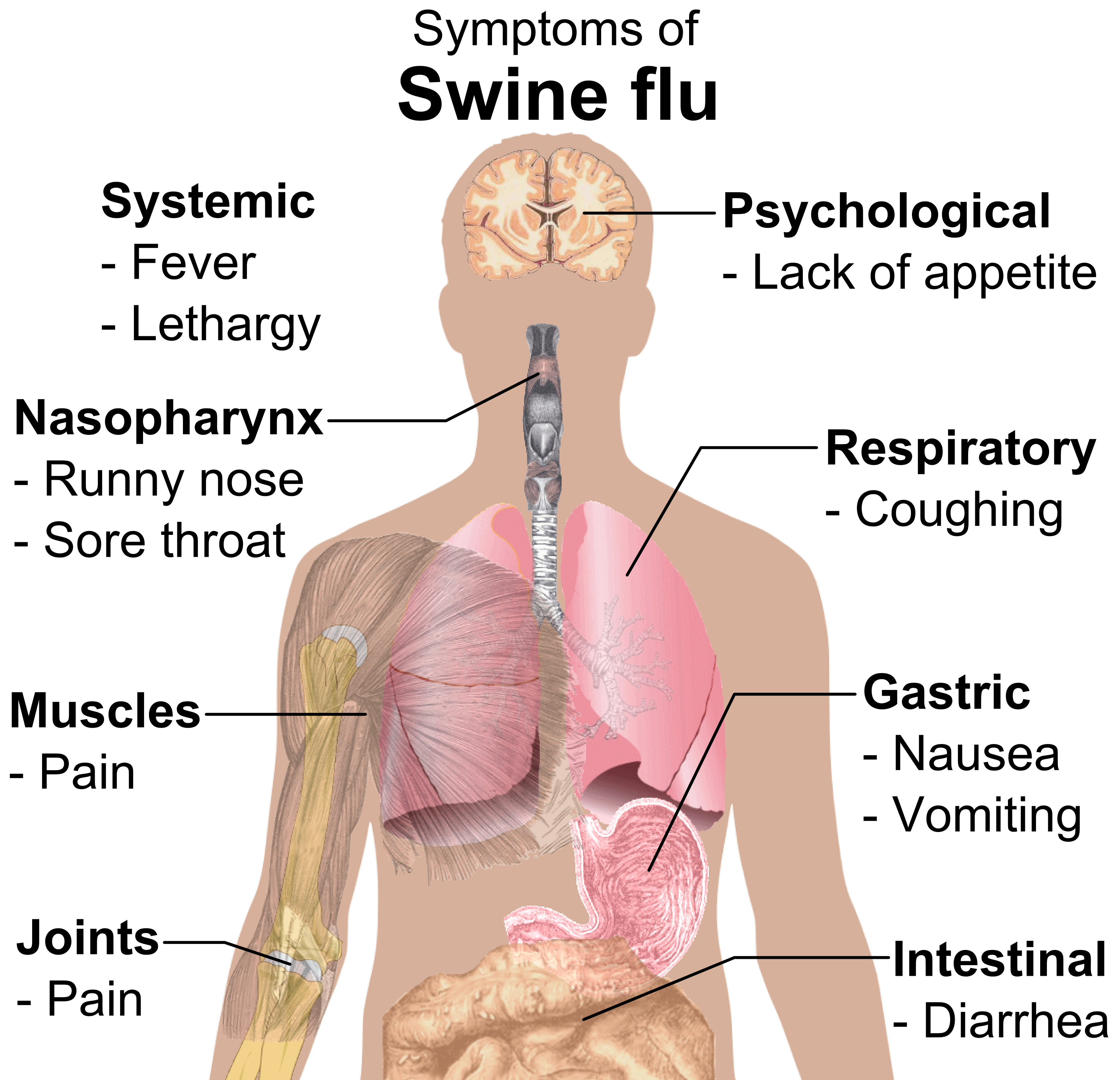
File:Symptoms of swine flu.png - Wikimedia Commons
Swine flu symptoms
Source: Wikimedia commons
After all, over the past 20 years, swine flu, bird flu, SARS, MERS, ebola, zika virus, and other illnesses have come and gone - illnesses which the media warned could become deadly worldwide pandemics. The pandemics that we were warned about just never happened. Zika virus, for example, killed just 53 people. And so I concluded that covid-19, like these other illnesses, would be a minuscule problem which would not impact the lives of people in the developed world in any noticeable way. 

Goodness me, I was wrong. I was so, so wrong. 

Why was I so wrong?

The problem was that I used inducive reasoning:

A pandemic has never happened in my lifetime, therefore a pandemic won't happen now.

It sounds ridiculous when you say it like that, but that really was my reasoning. There have just been so many times - particularly in the last 20 years or so - that the UK media have spotted a new illness spreading in a faraway country and created a moral panic. They said that a deadly pandemic was on its way, and we should be afraid - very afraid. But then virtually nothing happened to us. 

Perhaps when I was a teenager or young adult I was more concerned by these warnings, but as these warnings kept occurring, and with little effect on my life in the leafy suburbs of England, I began to see these pandemic warnings as just more background noise from the media. Bad news is good news in the world of newspapers, and so of course they would leap on any virus and attempt to needlessly whip up the panic among us - it sells papers (or brings in clicks).

Deadly viruses are bad for the communities which suffer them, of course, and I have every sympathy for those who suffer. But so few of them touched the UK in any way that life went on pretty much as normal for us throughout the times of these other viruses, meaning that the UK media were simply scaremongering and sensationalising, as usual.

So by about 2010, any time the media warned about a pandemic, I mentally switched off. They had said that x would cause a pandemic and it didn't; now they were saying that y would cause a pandemic. Based on experience of x being a storm in a teacup, I could be reasonably sure that y wouldn't be a pandemic either.

So when a new coronavirus began spreading around Wuhan in January, and the UK papers warned of a worldwide pandemic, I thought it would be yet another pandemic-cum-damp-squib. I was sure it would fizzle out just as the others did, without any change to life in Little England. The media had 'cried wolf' so many times before with other illnesses that I just didn't believe their pandemic warnings any more.

I was wrong not to believe them. This time the 'wolf' was real, and it was about to huff and puff and blow the world down.

Now here we are, with nearly 30,000 deaths in the UK, and over 200,000 dead worldwide, and the virus is showing no signs of abating. Everything in the UK is shut, including schools, offices, shops, leisure centres, and entertainment venues, and we aren't allowed to meet friends or family. 

The failure of inductive reasoning

Inductive reasoning led me to believe there wouldn't be a pandemic, and even if there was, it wouldn't hit the UK. 

As philosophers, we know that inductive reasoning is weak. All swans are white until you see a black swan. But in life, our experience shapes our way of thinking, and helps us to extrapolate future events based on the past. If Paul has always lied in the past, it'd be silly for me to believe him now. If whenever I lend money to Bryan he doesn't repay me, it would be naive and gullible of me to keep lending him money. So we simply must learn from the past. I think it was George Santayana who said:

Those who cannot learn from the past are doomed to repeat it.

I had learned that when the press warn of a pandemic, it doesn't occur. Now I've learned that sometimes, it does occur.

How bad will covid-19 be?

For the world and the UK, it's going to be horrendous. It already is horrendous, and few if any countries are over the hump yet. On a personal level, I'm just going to keep myself to myself, maintain social distancing, and self-isolate if I have symptoms. I doubt that I'll be in any real danger from the virus if I do catch it. After all...

I've never died before, therefore I won't die now. 

Thursday, 26 March 2020

Panic-buying, toilet paper, and selfishness

Today is an historic day. The 26th of March 2020 is a day I shall always remember. I have, after much searching, managed to buy some toilet paper!

A couple of weeks ago, selfish people began panic-buying toilet paper, pasta, hand sanitiser, wipes, and cleaning products.
Image source: BBC 

I have seen zombie movies, disaster movies, and post-apocalyptic movies where the rule of law goes out the window. But I have never seen a movie where people go panic-buying toilet paper because there is a virus doing the rounds. I guess fact really is stranger than fiction. It's not even as if covid causes diarrhoea or something which requires excessive amounts of toilet paper. The mind boggles.

I just can't get over the abject selfishness of people who go out and buy 60-100 toilet rolls when they only need 4-6 for the week ahead. It's inexcusable.

Ok,  I might excuse elderly or very sick people who have (a) been told to shield, (b) have no one who can shop for them over the next few months, and (c) cannot shop online. No one else has any reason to buy a gazillion toilet rolls.

My plight

Over the past few days, I have been on the hunt for toilet paper as I saw our supplies dwindling. I've been to four major supermarkets (Morrissons, Tesco, Sainsbury's, Lidl) and two smaller convenience stores, and not seen a single roll of toilet paper, box of tissues, or even kitchen roll in any of them. 

I'd actually started mentally preparing my son for the fact that we may have to improvise. I cut up some old tea towels and a bed sheet when we got down to our final roll of toilet paper, and ripped some newspaper into strips. And all the while, there are people with their spare rooms full to bursting with toilet paper!

But throughout all of people's panic buying, a quote from Michelle Obama has become my mantra: 
"When they go low, we go high."
Just because other people are selfish and buying more than they need, that doesn't mean I'll sink to their level.

Today, when I went into the petrol station to buy petrol and saw several packs of 4x toilet rolls, it was unbelievably tempting to buy more than one pack, so I wouldn't have to face the same problem again in just another few days' time. But I didn't. I got just the 4 toilet rolls. 

I walked out of there feeling pretty pleased with myself. I was on cloud nine that I'd found toilet paper after what had felt like an eternity, and I would not have to subject my son (and myself) to using newspaper and cut up bed sheets after going to the toilet. Moreover, I felt really pleased that I had resisted the temptation to buy more than I needed when I did get the chance. Michelle Obama's wisdom got me through.

We all need to eat, and we all need to go to the toilet. If everyone only buys what they need, there's plenty to go around. Liking and sharing is so popular on social media, but it seems much less prevalent in real life. Please be kind, be restrained, and share the love: share the toilet paper. 

Edit: When those four rolls were running low and we needed to buy more, we found toilet paper much more easily.

Friday, 6 March 2020

Aphantasia - I never realised I think differently from everyone else

Imagine a beach. Can you see the sand and the waves? I can't.

This week I discovered that I have something known as aphantasia. This is the inability to see things in my imagination - my mind's eye is blind! Of course, I've always known that I didn't really see anything when I imagined it (why would I see it? it's only imaginary after all!), I just never knew that other people really did see what they imagined. I still find it hard to believe that other people see what they imagine.

I was writing something about robot faces as part of my PhD research and I wanted to find out the name for seeing faces in inanimate objects, like doorknobs and car headlights (it's called pareidolia, by the way) and I came upon a page about aphantasia, describing how some people don't see anything when they imagine it. This was not a revelation; it seemed to be pointing out the blatantly obvious. It's like saying that people don't look as beautiful as they wished they looked, or that people aren't as rich as they want to be. Well duh, imaginary things and reality are obviously different. Turns out, it's not so obvious after all, as most people can see what they imagine. Weird.

Baggy McBagface. Image source: The Conversation

It's really strange that I never realised that my thinking was any different to anyone else's, and yet according to several studies, this "condition" of mine affects just 2-3% of people! So I'm in a tiny minority.

So aphantasia is a minority thing; most people have normal phantasia (they see what they imagine), and another minority at the other extreme have hyperphantasia (an exceptionally vivid imagination). I was certainly surprised to discover these differences in how we imagine. I've read Descartes, Locke, Hume, Kant, and other philosophers who wrote about ideas and imagination, and discussed these with others at length. Yet never did I realise that others were imagining differently from me.

Which of these categories do you fall into? To find out, you can take a VVIQ test here. I scored the very lowest score on every single question: no matter how hard I try, I don't 'see' anything when I imagine it. Visualising a beach is as impossible as visualising a colour that doesn't exist; imagining a house is as impossible as imagining what the thirty-second flavour of the alphabet sounds like.

How do I know what I'm imagining?

You might wonder how I know when I'm imagining something. How do I recall what things look like? That's not particularly easy to explain, but I'll try. 

I know when I am imagining something because I'm aware of the thought in my mind. I have thoughts, such as "I'm hungry", and "I must remember to go to the post office" and "I remember putting my purse on the shelf yesterday" and "horses are yay tall" and "5 x 6 is 30". None of these thoughts have any imagery for me, but I now understand that some of them may have imagery for other people. But the imagery really doesn't seem necessary to the thought. I know that 5 x 6 is 30 without having to visualise a rectangle of five squares in six rows: I just remember the fact. It's the same with where I put my purse, or what my mother looks like. I can rattle off a 'shopping list' of features of my mother, just as I can rattle off an actual shopping list. I don't need to see a picture of my mother in my mind to know that she has short hair.

It's both fascinating and unfathomable to discover that other people's imagination really is different from mine. I had no idea. Our minds are private, and I suppose that's why people like me manage to go so long without realising our minds are different to anyone else's. I could quite easily have never found out.

Wittgenstein gave an example that helps illustrate this. He asks us to imagine that everyone has a little box, and inside their box is something which everyone calls a beetle. No one can look in anyone else's box, but each can look in his own box. Everyone says they have a beetle in their box, but I have no way of knowing whether the contents of my box (my 'beetle') are the same as the contents of yours, or indeed if some people have empty boxes. The mind is the same; I cannot leave my own mind and look inside someone else's to check if it's the same as mine.

Probably not what Wittgenstein had in mind, but it's hard to know for sure.

What is life like for me, without any visual imagination?

Well, it seems totally normal to me not to see things I imagine, but that's not helping you to understand what it's like, so I'll try to clarify. But knowing which features of me are features of aphantasia and which are just parts of my personality is tricky. There's no way for me to separate the two, but I'll do my best. But know this: life with aphantasia feels totally normal. I see things that are real, and I don't see things that are imaginary.

Inside my imagination
When I close my eyes and imagine something, all I see is some sort of brownish blotches such as this. I suppose it's the insides of my eyelids that I'm seeing, because when my hands are over my eyes, what I see is darker, and when I'm in bright sunlight, what I see is lighter. But literally whatever I'm imagining or thinking about, this is what I see (if my eyes are closed; if my eyes are open I see what's in front of me).

Some people with aphantasia say they don't have visual dreams. I do. Dreams seem just as real to me as reality does (until I wake up of course). I can recall some dreams and they seem quite vivid. Of course, when I recall them I don't see any images though.

Many people with aphantasia report having a bad memory, particularly for visual things. I would say I have a pretty good memory actually: I can learn the names of a new year group of up to 60 students in a week. I have memorised all the national flags of the world (if I see the flag, I can identify the country; I find it much harder to hear a country's name and describe the flag though), and I obviously have a mind good enough to manage a PhD. I fare very well on all aspects of IQ-type tests, including things that seem to rely on imagination, such as spatial reasoning. I can memorise lists of things, and I can recall things I've heard more easily than many people can. For example, a few years ago I did some conservation work in the Amazon rainforest, and I learned over 70 bird calls. I didn't find it easy, but I did manage it where many others failed.

But my mind isn't perfect; I'll forget appointments if I don't write them down, and I forget how to do things if I don't practice. But I think that's fairly normal. 

I don't really enjoy reading fiction. Especially fiction which is description-heavy such as Lord of the Rings; it's excruciating to have to trawl through lengthy descriptions of a landscape. The fiction that I do occasionally read is more action-based, or I could happily read a play - where there's almost no description at all. I prefer non-fiction, as it sticks to the facts. Although I can read as quickly as anyone else, my comprehension is slower than I'd like. When I used to read fiction, it wasn't uncommon for me to reach the end of the book, but struggle to recall the plot. I have to make notes on academic papers or I will very quickly forget what I've read. That's a bit of a pain, but I've always managed: I am a prolific writer and happy enough to make notes on things I read.

What must life be like for people who do have a visual imagination?

It seems very strange -- and disturbing -- that some people see what they imagine. If you are seeing things that aren't real, that aren't there, then that to me sounds like an hallucination, if not the sign of a serious mental disorder. And suppose a person is imagining their dog is sitting next to them. When they see the dog, how would they know if it's the real dog or the imaginary dog?! It must be a bit like being in a hall of mirrors. Not to mention terrifying. I have sometimes imagined scary or upsetting events - if I actually saw these things happen in front of me because I'd imagined them, I'd be a dribbling wreck, seemingly surrounded by skeletons and snakes and other monstrosities - all imaginary, of course. 

But maybe people don't imagine scary things - perhaps they only imagine nice things. I must admit, it would be nice if I could call the faces of my deceased loved ones to mind, but I can't. I cannot see them any more, and when I imagine (think of) them, I see nothing at all. Dealing with grief must be a whole lot easier when you can just 'see' your loved ones and talk to them simply by imagining it. 

And holidays.... there'd be no need to go and see the Pyramids at Giza, the Grand Canyon, and the Hanging Gardens of Babylon, given that you can just 'see' them for free by imagining them. I'd save a fortune on holidays if I could just see anything I wanted to by an act of will! I'd travel the universe too.

Imaginary pancakes... or are they real? 
I've read that it's not just the sense of sight, but that most people can hear, smell and taste the things they imagine too (there doesn't seem to be the same phenomenon happening for touch though). I don't experience any of these things when I imagine them.

If others really can hear, taste, smell and feel what they imagine, then dieting must be a breeze! You could eat a tiny salad but just imagine that it was a burger and chips, or eat the same dull porridge oats for breakfast every day, but just imagine it was a breakfast fit for a king! I can only assume that it's not as simple as that, but I just can't get my head around the idea of really, actually experiencing the things you imagine.

Just a figure of speech

I'm still sceptical that others really do see (hear etc) what they imagine. Surely, no one can actually see something that's imaginary? You're having me on! It's a collective joke, for sure. Or perhaps - just like with the Emperor's new clothes - no one wants to admit that they can't see something which others claim to see. Most people don't want to feel "abnormal", to have a deficiency in place of an ability which others have.... if indeed others really do have it. So if some people say they can visualise something, others may agree even though they can't in fact visualise it. 

Or like the old me, people may think "visualising" something is just a figure of speech. I speak that way too: I say things like "ooh, I can just imagine myself lying there on the beach under the sun"... well yes, I am thinking about it, and as far as I am concerned, thinking about something and imagining it are the very same things. I always believed that people were speaking figuratively when they said they could 'see' or 'visualise' things. I knew I didn't mean it literally, so assumed they were the same.

Life goes on

It's a curious thing to go one's life (over 40 years now!) having an unusual condition and all the while, thinking it was normal. Anecdotal evidence on forums seems to suggest that people can go almost their entire lives without realising there is anything unusual about their thought processes. It's fascinating to think that a condition such as this, which has presumably been prevalent for quite some time, has hitherto gone unnoticed (or unnamed at least) until the 20th century. It does make you wonder what other mysteries people might be hiding within their minds, all of us trapped in our own little worlds, trying to interact as best we can. 

But in truth, lacking the ability to actually see what is only imaginary does not bother me at all, any more than it bothers me that I can't sense electromagnetic signals the way a shark can, or sniff out a missing person the way a dog can. These are not senses I need nor really want. I am perfectly happy to live with my mind the way it is, and be safe in the knowledge that everything I see, hear, smell, taste, and touch is real. 

Probably.


Friday, 13 December 2019

Election Reflection

It's that time again. No, not Christmas; I do of course mean general election time - which admittedly is about as frequent as Christmas. We've had three general elections and a referendum in the past 5 years. I think I've visited my polling station more often than some of my own relatives' houses.

The results are in from yesterday's election: 365 seats to the Conservatives; 203 to Labour. The election maps are awash with dark blue, for it's the Conservative Party's largest majority since the 1979 when Thatcher won. Whether we think such a landslide is strikingly good or strikingly bad, we cannot deny that it is striking.

Brexit

Given Boris Johnson's continued mantra that he wants to "get Brexit done" - apparently the Conservative Party's top priority - then such a large majority might seem to suggest that the people of Britain* also want to get Brexit done. However, what seems to have escaped Johnson is that 52% of voters backed parties who want a second referendum (Labour, Lib Dems, Greens and SNP) while only 47% of voters supported Brexit-backing parties (Cons and DUP).
* I'll come back to the divisions of Scotland and Northern Ireland below.

Why has there been such a large Conservative majority? Brexit has obviously been a key issue in this election, but I suspect that people (not everyone, but enough to make a difference) haven't necessarily voted for who they think will give them the result they want, but rather, they have voted based upon who is most likely to bring about some closure (of any type - remaining, leaving, anything other than limbo). If I am right, it would not bean enormous surprise, given that the Brexit referendum was 3.5 years ago, and it's barely been out of the news since. People - and indeed the news media - have often said that they're sick of hearing about Brexit.

Could it really be that being bored of Brexit has been one of the major driving forces in the Conservative victory? In "getting Brexit done" Johnson has sought to assure voters that it'll all soon be over. And that, perhaps, is what people want most of all. Just like a friend who keeps talking about their turbulent relationship, even though there are always new tumultuous developments, arguments, arrests, and altercations, it can become tiresome to hear about it day after day. After a while you wish your friend would either commit to making the relationship work, or leave the relationship, but most of all that they'd just shut up about it. And this seems to be many people's attitude towards Brexit at the moment: they're bored of it. I suspect that a sizeable number of people voted Conservative yesterday because they saw the Tories as the party most likely to get it all over and done with. I can't think of any other times in history when voters vote because they're sick of hearing about something, but I suspect this may be the case with this election.

Here's a little quote from Leonardo Dicaprio's character in The Beach  (2000) which seems reminiscent of such an attitude. (Whoever said a movie about backpacking in Thailand cannot give insights into a general election in the UK 19 years later?!)
"In a shark attack, or any other major tragedy, I guess the important thing is to get eaten and die, in which case there's a funeral [...] or get better, in which case everyone can forget about it. Get better or die. It's the hanging around in between that really pisses people off."
Of course, if and when Britain does leave the EU, then that doesn't mean it'll suddenly be out of the news. I would think Brexit will still be newsworthy for a few years yet.

Anyway...

Scotland, Northern Ireland and Wales

Look at a map (rather than a bar chart) of how the UK has voted, and you'll see a marked divide along country lines. 
• England is largely dark blue (Conservative); 
• Wales is dark blue (Conservative) and green (Plaid Cymru); 
• Northern Ireland is dark green (DUP) and burgundy (Sinn Fein);
• Scotland is almost all yellow (SNP)

Map of election results. Source: BBC News

Maps can be a little misleading though - for example, the green (Plaid Cymru) which appears to cover half of Wales does not represent half of Wales's population, but actually only a small share, because the area is sparsely populated. London and other major cities are also deceptive: they're small in area, but in terms of population size and number of constituencies, they're far larger. This means that the cartogram (see diagram below, or here for more info) looks rather different from the map. Labour has done well in urban areas, which are smaller on the map, making the larger rural areas in dark blue look more plentiful than they actually are.

Cartogram of election results. Source: BBC News

As the cartogram shows, the Plaid Cymru seats are very few: Wales has largely voted Labour and Conservative.

But Scotland and Northern Ireland have definitely have not. The success of the SNP has (predictably) added fuel to the fire that is Nicola Sturgeon's burning desire (see what I did there?) for yet another Scottish independence referendum (indyref). Sturgeon is desperate to leave the UK - a position which seems a little inconsistent with her equally desperate desire to remain in the EU. Does she see value in breaking apart from a historic union of countries, or in staying together with old pals? Does she think Scotland needs to join forces with other countries to be stronger? Is she happy to have her power overshadowed by a larger superpower, from further afield? The answers vary depending on which union / power we are taking about: the UK or the EU. 

What is interesting, however, is that despite the startling yellowness of Scotland on the map (and cartogram), Sturgeon's SNP only obtained 45% of the Scottish vote (see here) and so even if all the people who voted SNP are in favour of leaving the UK, this alone would not be enough to win a referendum for it to leave the UK. I expect that Sturgeon will call another indyref, and that Scotland will again choose to remain with the UK and thus out of the EU. But I could be wrong. We'll find out.

I imagine that if EU voters were now asked to decide whether Britain should remain in the EU, they'd vote us out! After all, it's hard to play nicely with someone who says they don't want to be in the gang any more. I wonder whether the people of England (and NI and Wales) would vote to push Scotland out of the UK if they were given the choice? They might. But I don't suppose Sturgeon will ask them.

So the UK may yet see more changes in its makeup. We need not see the dissolution of the UK/EU as a terrible thing though. I've written in a previous post how we need to take Brexit (and the potential loss of Scotland) with a pinch of salt: it;s not the end of the world, but just another page in history. In spite of their lack of support for our two main parties, Northern Ireland looks set to remain as part of the UK. But who knows whether post-Brexit border chaos will change things in Ireland.

Democracy and Proportional Representation

Elections and referendums don't always give us the results we want. I've been eligible to vote for two decades, and during that time, I've seen that sometimes the party I voted for did not win (either locally or nationally). When we lose an election - just as when we lose a board game, or lose our bet on a horse race - we can gracefully accept the result, or we can throw our teddies out of the pram. If we value democracy, then we should accept the result of it, even when we dislike it. Because democracy is more valuable than the rate of inflation, whether the Pound is up against the Dollar, and waiting times in GP surgeries. Freedom to vote means we have freedom to vote in bad leaders with stupid policies, and even if we do vote in bad leaders with stupid policies, then democracy is still worthwhile.

What doesn't seem great, however, is the way in which the number of representatives in the House of Commons is calculated. Here is how I think democracy should work: everyone gets a vote, and whoever gets the most votes is the winner. But our "first-past-the-post" system, doesn't support this, because it is possible for a party to have the most votes, but to still lose the election (massively). See below for how this can happen. Just imagine this happening on a larger scale (I've chosen some neutral colours to represent three main parties in a first past the post system):

                          《--------------Votes ------------》
Constituency       Grey     Beige     Cream
 Const. 1               850        900         750
 Const. 2               850        900         750
 Const. 3               850        900         750
 Const. 4              1300         0          1200
==================================
Total votes          3000      2700       3450
 Seats won              1            3             0

The party with the most votes is the Cream party, with 3450 votes. The Beige party has the fewest votes. But in terms of constituencies won - which translates into seats in the House on Commons - the Beige party has 3 seats, the Grey party has 1, and the Cream party, which received the most votes, has no seats at all.

Democracy is valuable because it gives the people what they want (even if what they want is a silly choice), but a first-past-the-post system doesn't really give the people what they want. The people wanted the Cream party to have the most power, but in fact it has the least power. This seems very wrong.

Let's get back to reality. These results are for the whole of the UK:

                                Con     Lab    SNP   LibD
% of vote won          44        32        4       12
% of seats won         56        31        7        2
No of seats won      365      203      48      11

If we compare the percentage of seats won to the percentage of votes won, we see that the Conservatives have benefited from the first-past-the-post system: they got less than half the votes, but over half the seats. The ones who've really lost out are the Liberal Democrats, getting 12% of the votes, but just 2% of the seats. This seems really unfair for those smaller parties who don't get their views heard.

The above table showed the statistics for the whole of the UK, but let's take a look at Scotland by itself:

                                Con     Lab    SNP   LibD
% of vote won          25       19       45      10
% of seats won        10        2         81       7
No of seats won       6         1        48        4

The results here are even more remarkable: the SNP have benefited enormously from the first-past-the-post system. No wonder they are triumphant about the number of seats they've won: for 45% of the vote to translate into 81% of the seats is shocking. The Lib Dems have lost out a little, but both the Conservatives and Labour have lost out massively in Scotland because of the first-past-the-post system. As I said above, the Conservatives benefited from the system overall, but the fact that anyone is benefiting or losing out because of the first-past-the-post system is unfair. And it's almost always the smaller parties who lose out to the election winners.

If representative democracy is about the views of the people being fairly heard, then proportional representation is essential, or the views of the losing parties are not heard. For the next few years, views represented by Labour and the Lib Dems (as well as other smaller parties like the Greens) will be lost in the blue tidal wave across England, and the Yellow tsunami across Scotland. In the next election, as in previous elections, the winners and the losers may change, but the fact that the smaller parties lose out does not change. Whether the minority parties who fail to win seats have abhorrent views, or progressive views, whether they wish to legalise honour killings or to neutralise the UK's carbon footprint, if they are the views of a significant proportion of the UK people then they should be represented by in Parliament. But they're not. And that is the real tragedy of this election, and indeed every election in the UK.

Monday, 11 November 2019

Techy or tacky: why social media is just about bearable

I joined Twitter this week.
Now, given that Twitter has been around for over a decade, you might think I'm coming a little late to the party, and you'd be absolutely right. This is no accident. I've been purposely avoiding Twitter under the impression that it's a platform where people go to snipe about the contestants on Celebrity Love Island having cellulite, or to spread disinformation about the 'dangers' of vaccines, to showcase their hatred of Jews and Muslims, and to share the general minutiae of their everyday lives with the entire planet.

I haven't changed my opinion in this respect; I still think that Twitter is the place to go to discuss celebrity cellulite, to spread disinformation, hatred, and minutiae - but now I'm willing to admit that there is (a little) more to it than merely this.

It's not just Twitter of course: Instagram, Snapchat, Facebook, Weibo (etc) are also guilty. Social media as an institution is predicated on the fact that people love to make snarky comments from behind the safety of the screen. I've written previous posts about people encouraging a girl to kill herself on social media (which sadly, she did), and people are oh-so willing to criticise politicians, celebrities, and indeed anyone via the wonderful internet.

I must admit I'm not above this sort of attitude - after all, in this blog post I have made (albeit implicit) judgements about people who watch Celebrity Love Island, oppose vaccinations, and so on. It's a human compulsion to criticise, and social media is the ideal place to do it: people can be vicious without (much) recourse, and reading the comments is a sure-fire way to waste away your life. That's why I try to avoid it.

You might be surprised that someone writing a PhD about AI and future tech shuns social media, but there is no reason to think that all tech is a force for good. We shouldn't just accept tech with open arms merely because it is new or techy. (Indeed, my thesis will serve as a warning as well as an attempt at a solution to the perils of new tech.)

I've not always shunned social media: I spent ten years of my life on Facebook, and it was not time well spent. I knew it was drivel, yet I found myself scrolling through it several times a day, often shaking my head at the banality of its content, but reading it nonetheless! 

I probably spent an hour a day looking at the chocolate-covered faces of the nephews of old school friends, or watching people I once met on holiday pour a bucket of ice over their head, or listening to the rants of people I didnt really consider friends, but felt social pressure to friend them on Facebook because they'd sent me a request and I sort of knew them. It took the Cambridge Analytica scandal in 2018 to give me the push I needed to leave Facebook. 

So, I deleted my account.* The following day, there were several times when I thought to myself "I'll just check Faceb-- oh, I deleted it. Ok I'll do something else." Within a couple of days, I stopped thinking about it altogether, and didn't miss it at all. Now, it's just not a part of my life any more. It's something I wasted a lot of time on, and ditching it gave me more time to devote to other things (such as my son -- not just eBay, Pinterest and TV!)
* Social media being what it is, I understand that my profile was not really deleted, at least, not by Facebook. It'll never be obliterated, short of a planetary meltdown on the scale of the extinction of the dinosaurs.

After that watershed moment (not just leaving Facebook, but leaving Facebook and not missing it at all), I resolved to stay away from social media for good. In my humble opinion, Facebook is possibly the least toxic of the social media outlets: at least it's people I know writing about things in their actual lives. On the other hand, Instagram is probably rife with duck-pout selfies and photos of people's dinners (this is my guess; I must admit I haven't checked). Snapchat is the place to go if you wish to receive unsolicited "dick pics" (again, this is my guess, not an empirical fact). And as I wrote earlier, Twitter is primarily celebrity-bashing, banal arguments, and disinformation. Weibo I'm less sure about, but it is probably filled with posts of people wholeheartedly endorsing the amazing Chinese government. In a nutshell, it seems to me that social media platforms are the means by which humans disseminate the drivel which we would tune out if someone were saying it IRL (in real life). Or it is the written (photographic) manifestation of smalltalk which is palatable in tiny doses, but causes severe nausea and brain damage when taken as a regular part of one's diet. 

So why the turnaround?

If the above is my genuine opinion of social media (and it is) then why on earth have I just joined Twitter?

Well, I was convinced by my friend and fellow grad student Mo (I'm not mentioning their real name; I wouldn't want to be named on someone's blog without my knowledge, unless they were citing my awesome work, of course). Mo said that Twitter is a great place to find out about new research, to make connections with people writing about similar things, and to find out about conferences. At first I was unconvinced, but Mo made a compelling argument. Mo also said Twitter is a great place to self-publicise (although Mo noted that they hate soing this, as it sounds so arrogant and conceited).

I gave it a fair bit of thought, and decided that Mo was probably quite right - Twitter could be useful.

But how could I go on Twitter whilst avoiding the chatter about celebrity cosmetic surgery and the banal minutiae of strangers' lives? Further reflection gave me my answer, and I felt more than a little sheepish. Social media is an echo chamber: if my previous experiences were characterised by pointless trivialities, then I had only myself to blame. If my online friends had interests which I was/am so disdainful of, then why did I engage with it - and with them? I must have engaged with it, because it kept coming back! 

The Plan

This time around, on Twitter, my intention is this: 
1. Follow only people or organisations whose interests truly fit with my own
2. Don't engage with banality, should I happen to see it
3. Unfollow people who routinely post banality 

Will it work out? We shall see. If I don't complete my PhD because I'm too busy commenting on botched nosejobs and why a score on Strictly should have been an 8 rather than a 7, then we'll know the experiment failed.

Wish me luck.

Thursday, 24 October 2019

Scholar's guilt

Today is the first day in years that I've had an entire day to myself. My son is away for the day and night with Beavers, and I had an entire day to do with as I pleased.

Obviously, I have day times when he's at school and I am at home, but this was an entire 24 hour period.

It was weird.

So what did I do with my time? Well, I did a few necessary tasks like laundry, then I decided no, I should make the most of having the day of freedom.

So, I got myself a glass of wine (it was 4pm; I never drink before my son's bedtime to this was an uncharacteristic indulgence), set up the hammock hanging between two trees in my garden, and lay back and read a book.

Sounds leisurely enough, right?

The book was an academic text which I think will be pretty crucial for my PhD (John Danaher's Robot Sex). I was highlighting and making notes too.

The incessant studying even on a day of 'freedom' is of course caused by a phenomenon that many students, professors and academics are familiar with: scholar's guilt.

Whenever I'm not writing/researching (and not parenting) I have a voice in my head which says "you should be working on your PhD". It's like a micro-managing pedant lives on my shoulder, forever checking up on what I'm doing.

That's not to say I'm always working - of course I'm not! In fact I found the time today to scroll through Pinterest while lying in the hammock - then accidentally dropping my mobile phone onto the floor and smashing the screen on it 😭 (and I was only a couple of gulps into the wine, in case you're wondering!) But I digress.

The salient point is that while I was scrolling through Pinterest- and later, Googling how much it costs to repair the screen on my phone (it costs about 75% of what I paid for for the phone 😭) - I had scholar's guilt all the while.

I suppose it's just something that people either learn to live with, or they somehow overcome it. I don't get the guilt when I'm with my son, as there is no conceivable way I could do any substantive work while he's awake... but whenever he's asleep or away from me, I feel it. The nagging feeling that I ought to be working. Even when I'm sleeping over at my mum's house, or on the few occasions when I wake up before my son, the scholar's guilt is there, telling me to get PhD-ing.

Then again, perhaps a little scholar's guilt is a good thing, or else I may spend my non-childcaring time just lazing around in a hammock and drinking wine all day long. Then I'd never complete the PhD - and it'd cost me a bloomin' fortune in smashed phones too!